

THE DROWNING DANGER ZONE
How In-Water Lifeguarding Can Save Lives This Summer


Death in the Bronx
Thermometers were bleeding in the Bronx. Temperatures hit the 90s with air so sticky people felt glued inside their clothes.
Five-year-old A.T. arrived at Playland Park pool with his mother and grandmother, eager to splash in the cooling waters on that searing first day of August 2024.
A short time later, he was pulled from the shallows, blue and not breathing. Code 3, lights and sirens screaming, his tiny body bundled away in the back of an ambulance. But A.T. was a fighter. He struggled to stay alive for three more days. Died on the fourth.
“A short time later, he was pulled from the shallows, blue and not breathing. “
Here’s what baffles A.T.’s father: lifeguards were on duty at the time of his drowning, but “ignored or did not notice” when the child slipped the waterline for five full minutes. That’s the claim he makes in a lawsuit against the county and the company running the pool at the time.
A.T.’s father also argues that murky water quality in the pool “hindered the lifeguards’ ability to see beneath the surface.”
Nearly four thousand drownings occur in the U.S. every year.
“ … as many as 400 people — drown in public and municipal pools under the watch of lifeguards paid to protect them. Nearly all of those deaths happen in the shallow end.”
While the majority of those take place in unguarded residential pools, ten percent — as many as 400 people — drown in public and municipal pools under the watch of lifeguards paid to protect them. Nearly all of those deaths happen in the shallow end.
The Drowning Danger Zone
In the case of A.T., regardless of fault, his preventable death highlights a vexing problem: lifeguards in observation chairs or even roaming pool decks are often too far removed to be instantly effective in an active drowning emergency. Fortunately, the solution is radically simple.
We need to put lifeguards directly into the drowning danger zone.
In busy municipal, public, or even guarded private pools, at least one lifeguard should be IN THE WATER, highly visible and constantly wading through the shallows. The place where most drownings happen.
“We need to put lifeguards directly into the drowning danger zone.”
So what would that look like?
In-Water Lifeguarding
Let’s imagine the A.T. incident from a more hopeful vantage point. The boy goes into the water alone. He’s crawling arm-over-arm along the pool ledge, like many young children do, thinking he’s safe even in overhead water as long as he has one hand on the deck.
A lifeguard in a chair stand tracks A.T.’s pool entry but turns away to scan the rest of his zone. In those few seconds, A.T. loses his grip, dropping beneath the surface.
In his panic, he does what many weak swimmers do: he thrusts his arms and legs down in desperate attempts to breach the surface, head back, mouth open, hunting breath.
Water Scout
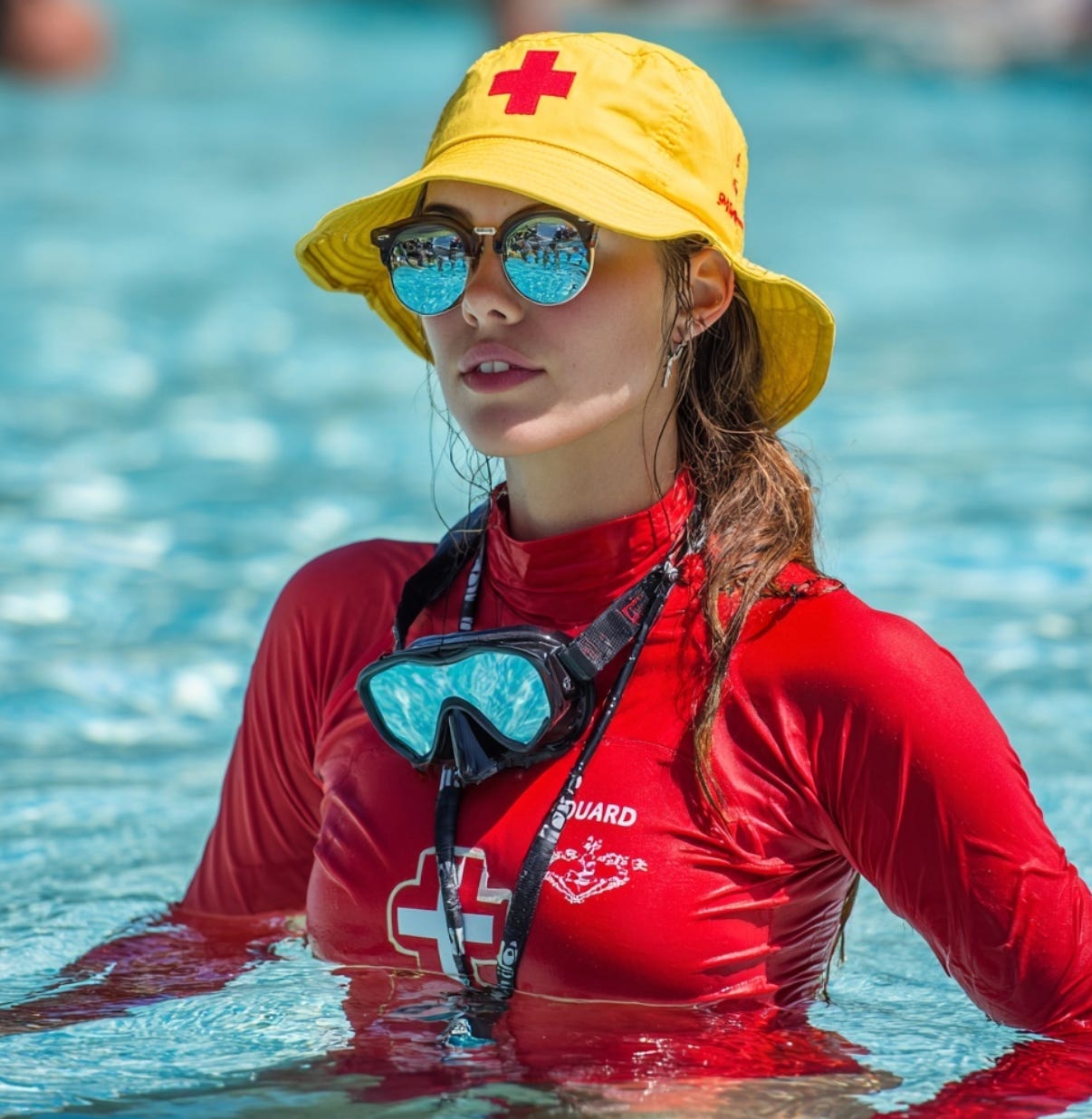
Posted near the center of the pool’s shallow end, a designated Water Scout lifeguard, conspicuous in a bright yellow bucket hat and red rash shirt, has been eyeing the wall crawlers. She notices that the little boy who had been gripping the rim at her 3 o’clock has disappeared. Glare from the sun prevents her from seeing what’s below.
The Water Scout lifts the dive mask and snorkel hanging from her neck. She presses the seal to her face and ducks underwater.
Though visibility is poor in the turbid pool, the dive mask allows her to see A.T., his limbs egg-beating the water but making no progress in any direction.
The Water Scout recalls a real-life video from her training. It showed a young boy, not so different from this one, somersaulting in a large public pool, trying to find purchase in the liquid space. To the adults passing within inches of him, it scanned as play. But the Water Scout knows now that the boy was actually dying. Same as this one.
She resurfaces, blows her whistle and shouts to activate the facility’s emergency action plan.
The chair-stand lifeguard clears swimmers from the pool, the pool manager calls 911, while another lifeguard drops his lunch in the breakroom, retrieves the Bag-Valve Mask (BVM) and an Automated External Defibrillator (AED), and dashes poolside.
In five strides and as many seconds, the Water Scout is over A.T.’s submerged position. She threads her rescue tube under the boy’s thin arms. It instantly buoys his body to the surface.
She tilts her ear to A.T.’s mouth, listens for breath while watching his chest for rise and fall. Fingers to his neck, she palpates a weak pulse. But the boy is not breathing, his skin is cyanotic.
The Water Scout gives two rescue breaths, then lifts the boy out of the pool and into the arms of the breakroom lifeguard. He places A.T. on the hard surface of the deck where he’s already positioned the BVM and AED within reach.
In this scenario, A.T. lives.
In the best circumstances, his would not have been a rescue response at all, but a prevention. The Water Scout intercepts A.T.’s wall-crawling, reunites him with his family and directs them back to safer waters.
The Brain Death Clock
For a drowning victim deprived of oxygen, irreversible brain damage usually begins at 4 to 6 minutes. According to the lawsuit claims, A.T. was under for more than five minutes. Visualize being submerged for the duration of the Queen song Bohemian Rhapsody, which clocks in at 5 minutes, 55 seconds. Literally a lifetime.
“Visualize being submerged for the duration of the Queen song Bohemian Rhapsody, which clocks in at 5 minutes, 55 seconds. Literally a lifetime.”
Top Notch Training
Several agencies train and certify lifeguards in the U.S., with the American Red Cross being predominant. The majority of young lifeguards, very often high school and college students who successfully pass its rigors, typically emerge skilled, diligent, and highly motivated.
I can personally attest to this, having recently recertified with a cadre of lifeguard candidates aged 15 to 19. By course's end, I would’ve trusted any of them with the safety of my own family.
Failure Point?
So where’s the failure point in guarded pools that allows children like A.T. to slip through the safety net?
Some experts believe it has to do with the way lifeguards are deployed, perching them on inadequate observation platforms where glare, distractions, crowds, even the facility itself, can obscure swimmer surveillance and impede swift, life-sustaining actions.
Maria Bella, a 40-year veteran of the aquatics industry, said in a 2019 interview with Athletic Business magazine:
“They cannot identify a drowning victim throughout their entire assigned zone because either the chairs are too low, they’re in the wrong position, or the lifeguards are doing things like counting heads.”
Her five-year study found effective lifeguarding requires scanning to the bottom of the pool, not just the surface. Her solution includes digital scanning technology, a cost that may not make the cut for cash-strapped public programs.
In-Water Lifeguarding uses resources already budgeted for the job: people, simply deployed more effectively.
Presence as Prevention
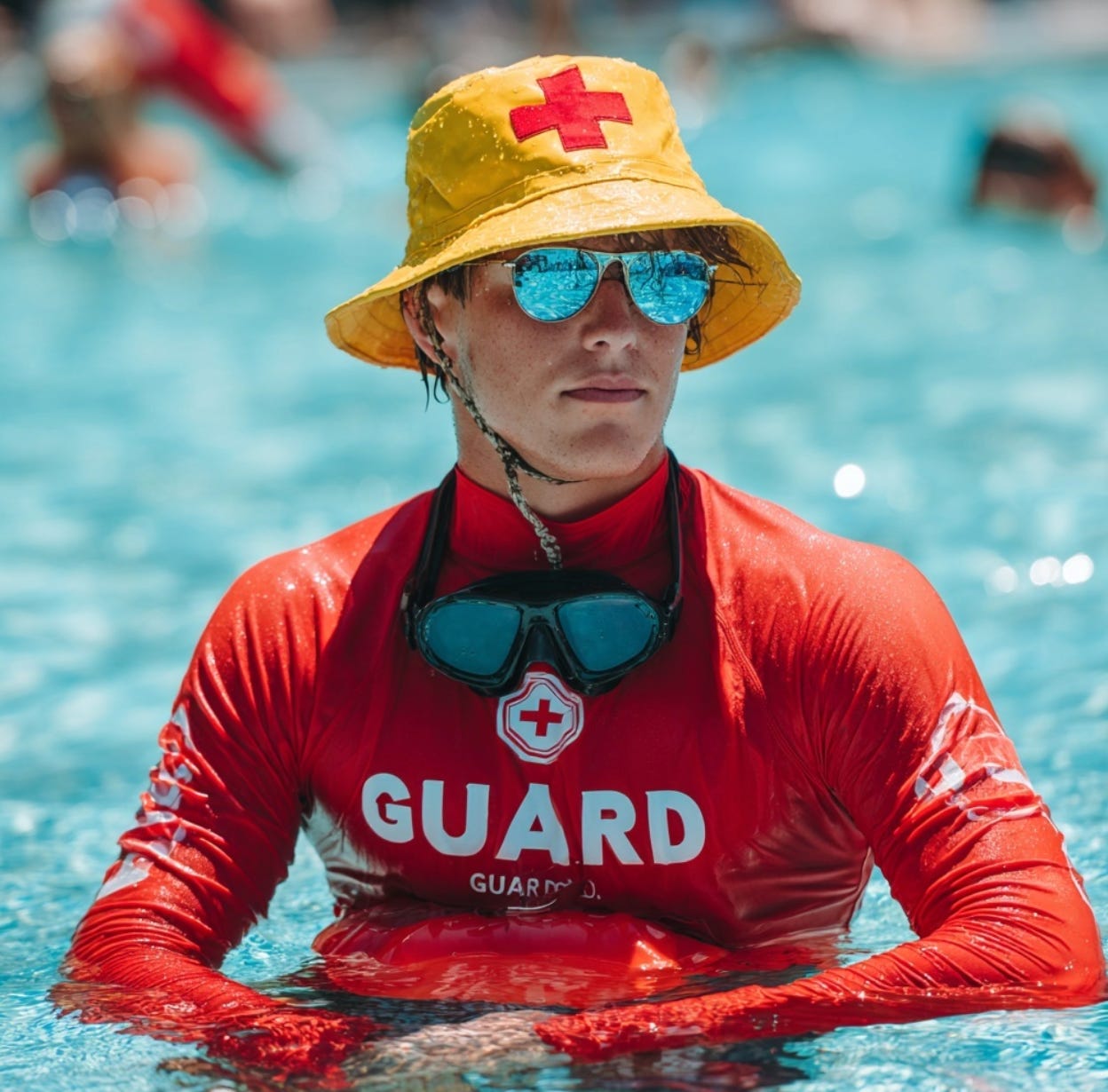
Through a consistent, trusted public presence, In-Water Lifeguarding can succeed the same way community policing does.
When swimmers see a uniformed lifeguard patrolling inside the pool, the message is immediate. A trained rescuer is within arm’s reach, ready to stop trouble before it starts.
Such proximity also reduces the risk of a missed scan — overlooking a swimmer in distress before it’s too late.
The Water Scout is also better positioned to swiftly intervene in dangerous activities like rough horseplay or breath-holding games before they escalate into drowning incidents.
Rather than frustrated lifeguards whistling from chair stands in embarrassing public call-outs, In-Water Lifeguarding enables low-profile, person-to-person interventions. The result is a less hectic, more cooperative, and safer pool environment.
Variations of In-Water Lifeguarding are already being used on both coasts. New Jersey State Parks instruct their lifeguards to conduct in-water patrols in the shallows and to use kayaks for deep water monitoring. Los Angeles County requires its lifeguards to train on paddleboards and crew on patrol boats, while California State Parks includes kayaking and skin diving in its Junior Lifeguard rescue training curriculum.
This Summer
A strong El Niño is developing right now. That means a hotter summer, more people seeking relief in public pools, and higher drowning risks.
The statistics have shown us where the danger lies. So why aren’t we there already?
In-Water Lifeguarding, built on the proven principles of high-presence monitoring and close protection response, puts trained lifesavers directly in the drowning danger zone.
It’s there where they can immediately and definitively determine whether an individual is in danger and respond not in minutes, but in seconds.
For facility managers, aquatics directors, pool managers, and head lifeguards, enacting an In-Water Lifeguarding pilot program is as simple as setting up another pool protection zone, this one in the shallow end, and writing it into their existing Emergency Action Plan.
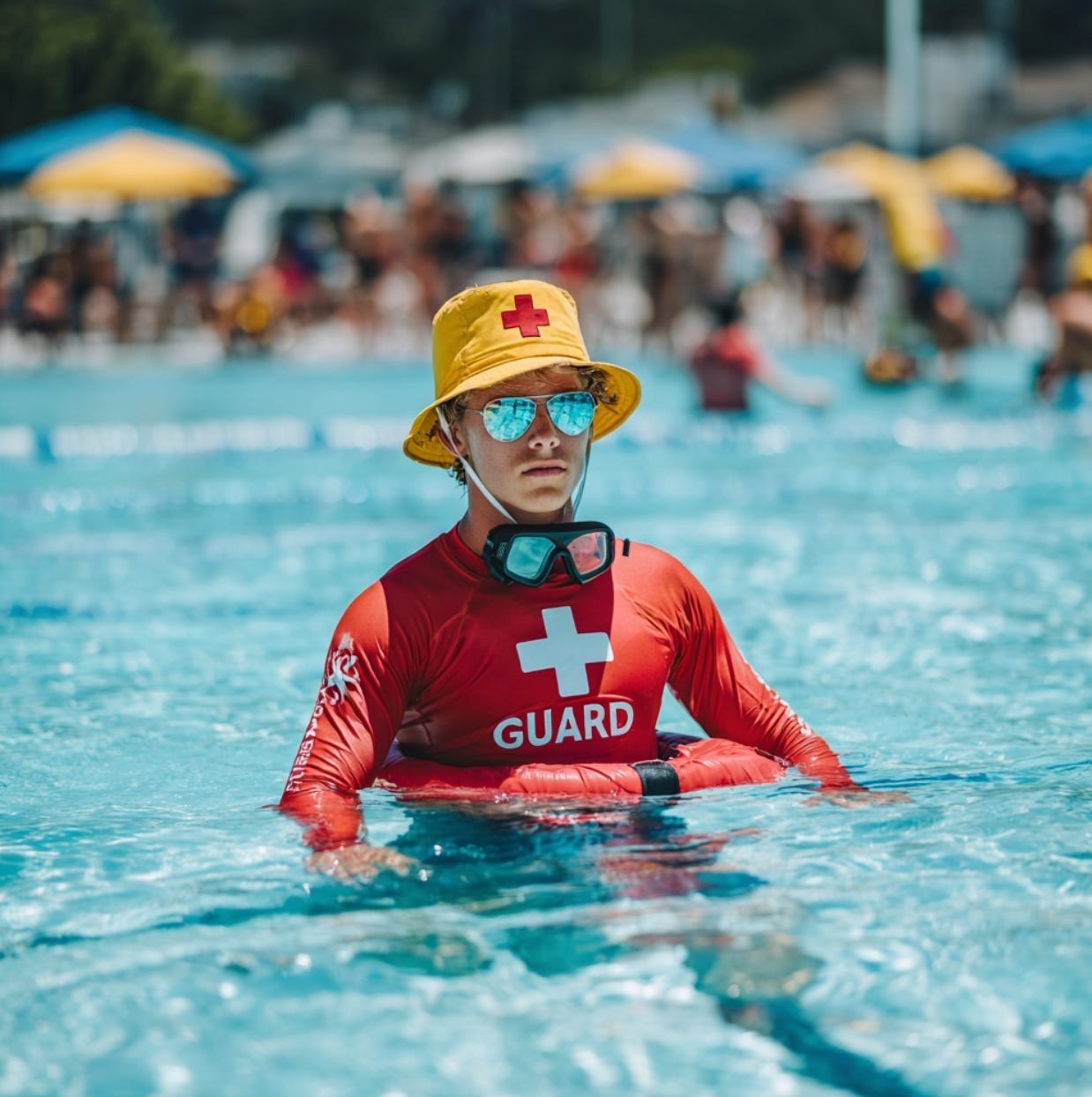
Whether it’s a two- or three-person rotating protection team, one of the lifeguards is always in the water. Always in the drowning danger zone.
“Whether it’s a two- or three-person rotating protection team, one of the lifeguards is always in the water. Always in the drowning danger zone.”
Evaluating the effectiveness of these pilot programs would require asking two questions:
Has In-Water Lifeguarding reduced rescue response times?
Has it reduced or eliminated drowning emergencies at our facility?
Yes, answers to both — and sharing those results with lifeguard certifying agencies — could lead to its adoption into the formal curriculum and, ultimately, widespread use here and abroad.
Summer should be one of the happiest times of our lives, not an enduring memory of heartbreaking loss.
Not one more child, not another A.T., needs to die in a pool drowning. All we have to do is act on what we already know.
—END—
Kevin Sites is an American Red Cross-certified Lifeguard, former Emergency Medical Technician, former First Aid/CPR/AED and Water Safety Instructor, and a current PADI Scuba Divemaster and Rescue Diver. He’s also a journalist and author of the prize-winning novel, The Ocean Above Me, published by HarperCollins.